Ship hull inspection
Inspect hull condition in dry dock or afloat using class-appropriate crawler, ROV and thickness-measurement methods.
What you receive
- Location-linked UT readings with calibration records
- Hull/underwater image and video register
- Defect, coating and coverage report
- Class-format supporting evidence where specifically accepted
When you need it
I need ship-hull thickness readings or underwater inspection
Who it is for
- Shipowners and ship managers
- Shipyards and repair facilities
- Port and marine asset owners
- Class-supervised survey contractors
Scope and options
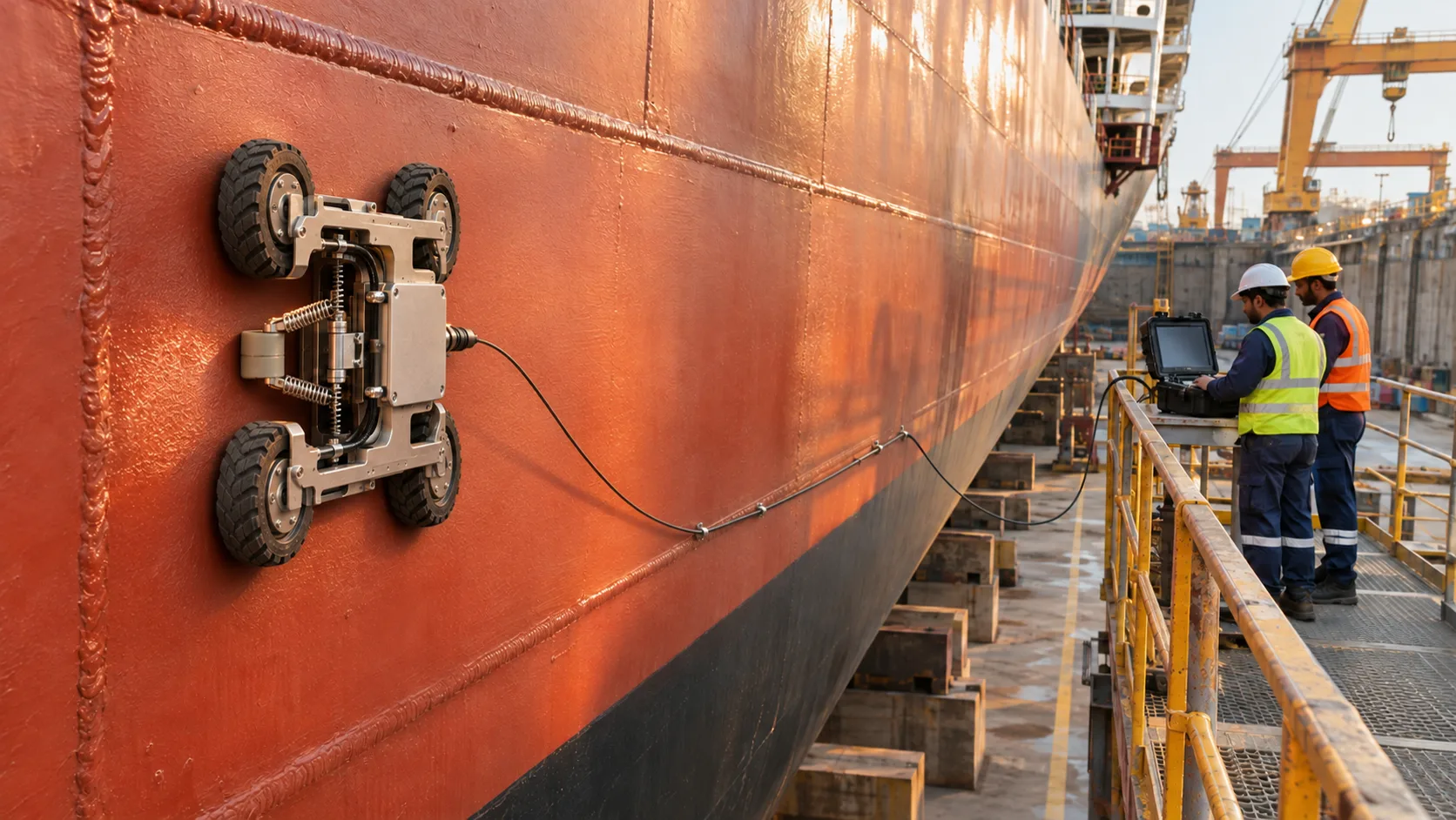
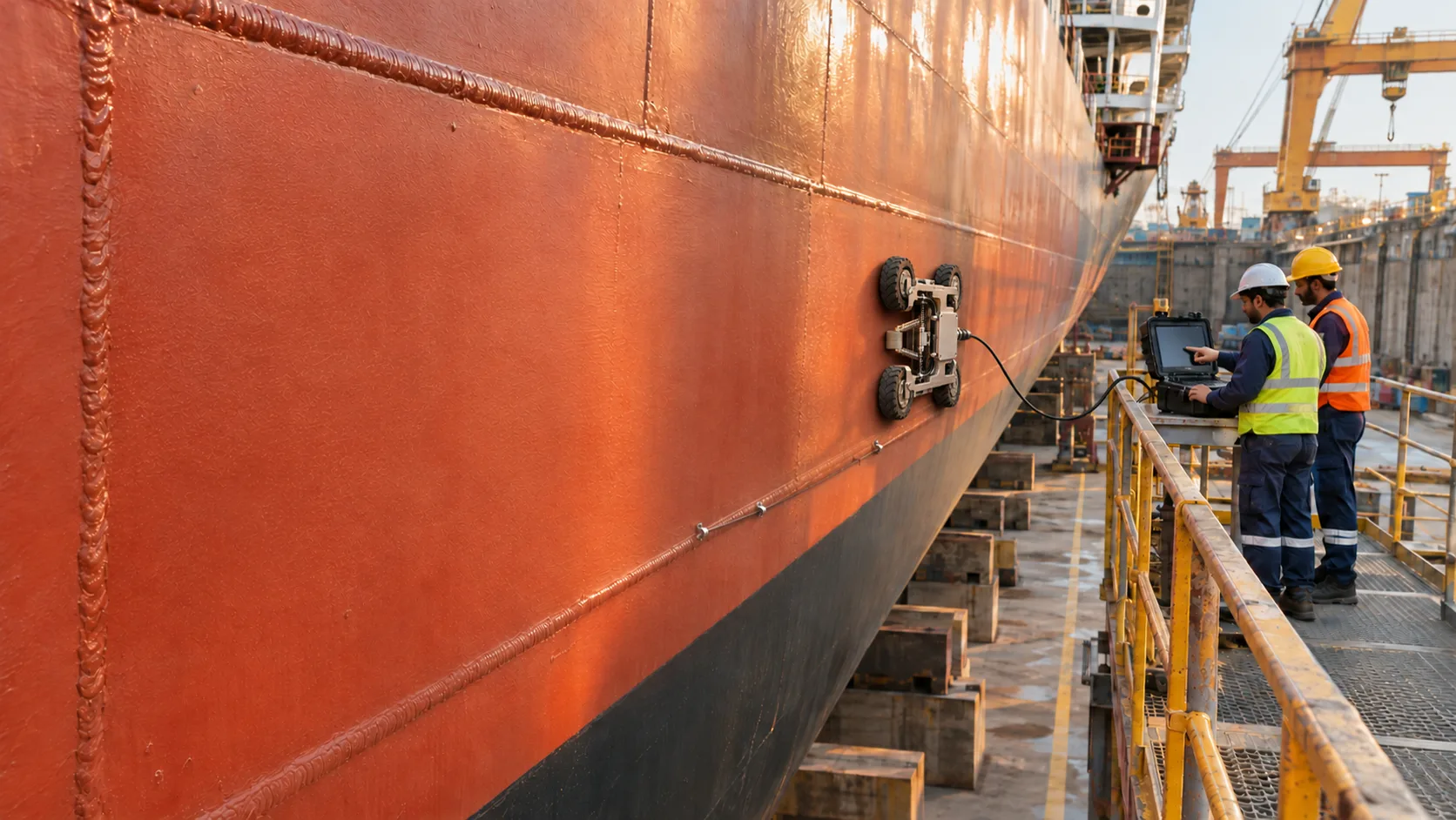
Crawler UT is a contact NDT method that measures remaining plate thickness on suitable hull surfaces; ROV work is visual/sonar observation underwater.
Dry-dock and afloat/UWILD inspections have different access, evidence and class/flag acceptance conditions.
Class-use thickness measurements require accepted personnel, equipment, calibration and service-supplier arrangements.
Magnetic-crawler ultrasonic thickness gauging
Move a contact UT instrument across suitable accessible steel surfaces.
Magnetic adhesion needs compatible material/surface geometry; coating, coupling and calibration affect measurement.
ROV hull, propeller and underwater inspection
Record accessible submerged surfaces using a remotely operated vehicle.
Visibility, currents, fouling and access constrain coverage; visual inspection is not automatic thickness measurement.
Underwater UT using a suitable robotic system
Take contact thickness readings underwater where the system permits.
Separate specialist scope with accepted calibration and measurement procedures.
Coating-condition inspection
Document visible coating defects and specified coating measurements.
Visual condition is not coating-thickness measurement unless a suitable test is included.
Hull cleaning
Remove fouling using an approved specialist method.
Hull cleaning is a separate scope requiring port permission, biofouling/waste controls and coating compatibility.
Underwater infrastructure and scour inspection
Inspect accessible piers, intakes, gates and submerged assets.
Engineering interpretation and structural acceptance remain separate.
Terms explained
- UT thickness gauging
- Ultrasonic measurement of remaining material thickness at defined hull locations.
- UWILD
- Underwater Inspection in Lieu of Dry-docking, when accepted by the relevant class/flag process.
- ROV inspection
- Remotely operated underwater visual or sonar inspection; it is distinct from contact thickness measurement.
Questions
Does a magnetic crawler work on every ship?
Adhesion depends on suitable ferromagnetic material, surface geometry and condition. The vendor must assess the actual hull and access arrangement.
Can an ROV video tell us the steel thickness?
Thickness requires a suitable measurement instrument and procedure. Video supports visible-condition assessment but does not replace UT.
Does this replace dry docking or a class survey?
An afloat inspection can support an accepted UWILD or class survey only when the flag/class requirements, approved service supplier and attending surveyor accept the method and evidence.
Is cleaning included with inspection?
Only as a separately approved scope. Local port rules, environmental controls, fouling management and coating limits must be reviewed before cleaning.
Method and limits
Dry-dock inspection gives direct access to the exposed underwater body; afloat work may use an approved in-water / UWILD process when the relevant class and flag conditions are met.
Magnetic-crawler UT records contact thickness readings on suitable ferromagnetic hull areas; ROV visual/sonar inspection covers underwater condition and access.
Thickness measurements used for class decisions must follow the applicable class-approved service-supplier, personnel, calibration and survey requirements.
Sources
- Geospatial guidelines and entity self-certification conditions
Department of Science and Technology
- Hydrographic standards and specifications
International Hydrographic Organization
- Approved service suppliers: in-water, thickness, NDT and remote techniques
Indian Register of Shipping
- NDT, thickness-measurement and remote-inspection supplier categories
Indian Register of Shipping