Industrial inspection
Inspect difficult industrial assets using suitable cameras, robots and selected non-destructive tests.
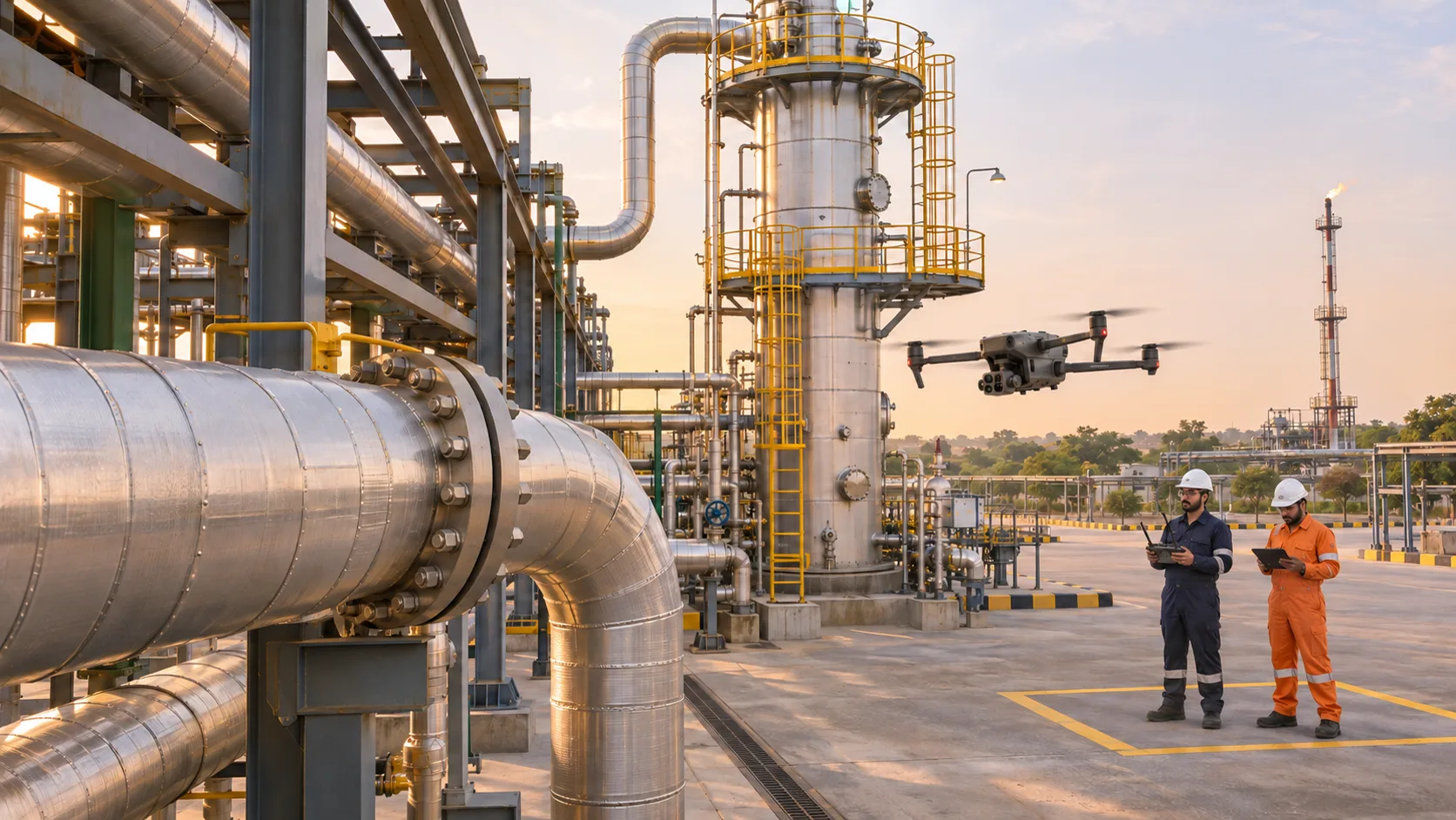
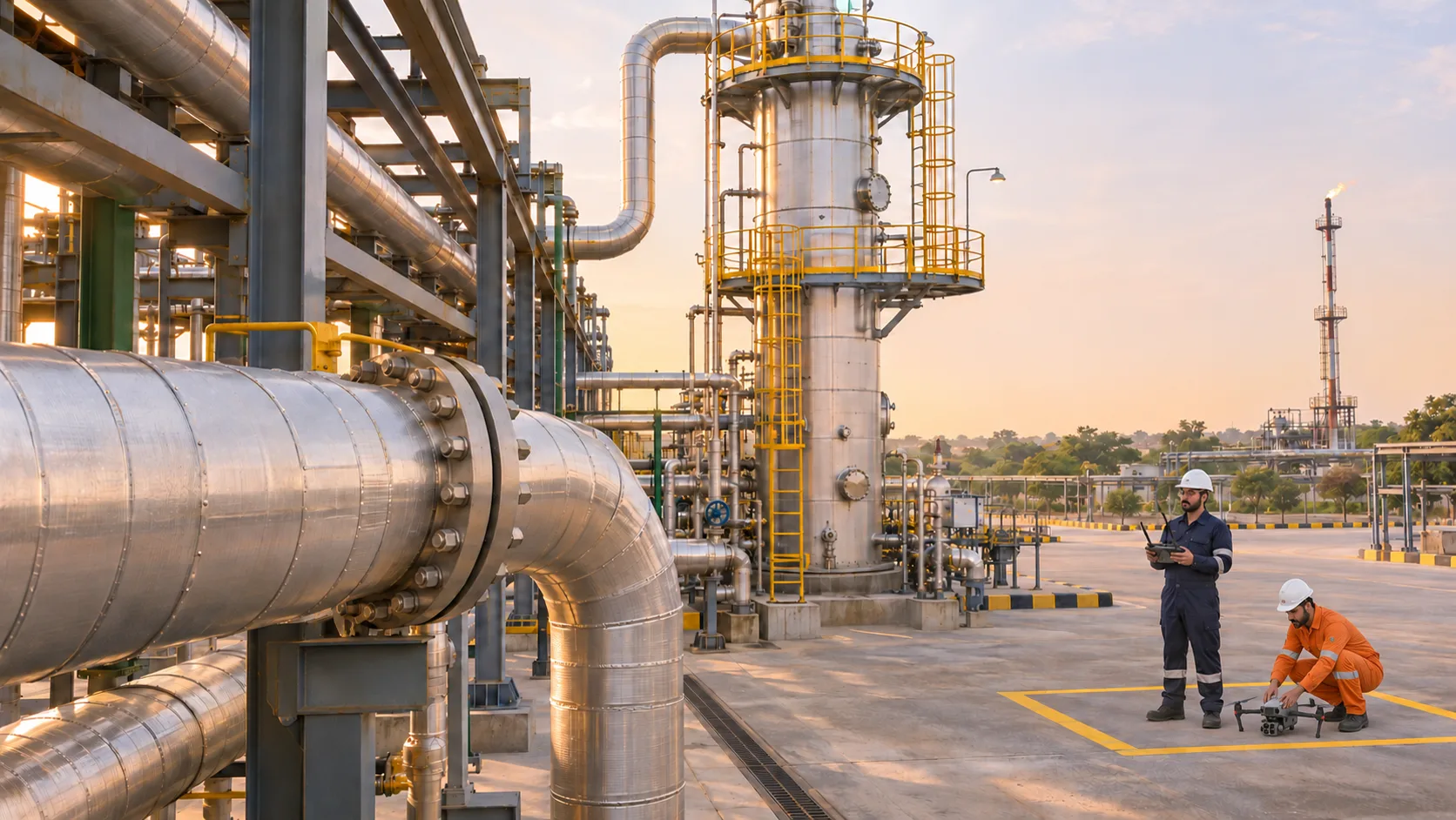
What you receive
- Asset-referenced inspection imagery/video
- Defect and inaccessible-area register
- Calibrated UT readings where scoped
- Qualified inspection/NDT report and follow-up recommendations
When you need it
I need to inspect a stack, tank, boiler or other difficult industrial asset
Who it is for
- Oil and gas
- Power and cement
- Steel and process industries
- Storage terminals
Scope and options
Remote visual inspection, confined-space robotics and ultrasonic thickness testing are distinct industrial inspection methods.
UT is a calibrated contact measurement performed by qualified NDT personnel; imagery alone cannot supply wall thickness.
Confined-space work depends on isolation, atmosphere assessment and equipment suitability for the hazard.
Stack, chimney and flare external inspection
Observe difficult elevated external assets.
Heat, operations and hazardous-area restrictions determine access.
Confined-space drone/robotic inspection
Inspect accessible tank, boiler, silo or vessel interiors.
Atmosphere assessment and isolation are required; non-rated equipment must not enter explosive atmospheres.
Robotic or drone-contact ultrasonic thickness testing
Measure accessible material thickness with a suitable contact probe.
Contact UT is delivered as a calibrated NDT measurement on accessible material; camera imagery alone does not provide wall thickness.
Methane/gas-leak detection and LDAR support
Use gas-specific sensing to locate suspected emissions.
Detection, concentration and emission-rate quantification are separate claims; confirmation may be required.
Industrial infrared thermography
Screen operating equipment for abnormal heat patterns.
Surface temperature patterns need competent interpretation.
Industrial surface/coating inspection and cleaning
Assess coatings or undertake suitable specialist cleaning.
Cleaning is a distinct approved scope; permits, waste controls and materials compatibility apply.
Terms explained
- Remote visual inspection
- Camera-based examination of difficult external or internal industrial assets.
- Confined-space robotics
- Specialist protected platforms used inside tanks, boilers, silos or vessels after site safety controls.
- UT
- Ultrasonic testing: contact measurement requiring suitable equipment, calibration and qualified personnel.
Questions
Can a normal camera measure wall thickness?
Thickness requires a suitable NDT instrument, calibration and contact or other validated measurement method.
Can you fly a drone into an operating tank?
The default scope requires site-specific authorisation before that operation. Isolation, atmosphere assessment and equipment suitability must be authorised by the plant. Ordinary drones are not intrinsically safe.
Does a methane detection report quantify the emission rate?
Only when a validated quantification method is explicitly commissioned. A detection or concentration reading alone does not establish a mass emission rate.
Will remote inspection replace every human inspection?
Coverage, test method and acceptance requirements may still require specialist access, additional NDT or an authorised inspector.
Method and limits
Match external, confined-space and contact-testing methods to the asset.
Require plant permits, isolation and hazardous-atmosphere assessment.
Use qualified NDT personnel and traceable calibration for measurement-based tests.
Sources
- The Drone Rules, 2021 — G.S.R. 589(E), Gazette of India
Ministry of Civil Aviation / Directorate General of Civil Aviation
- NDT, thickness-measurement and remote-inspection supplier categories
Indian Register of Shipping
- Drone methane detection method reference
SPH Engineering