Pipeline & rail corridor inspection
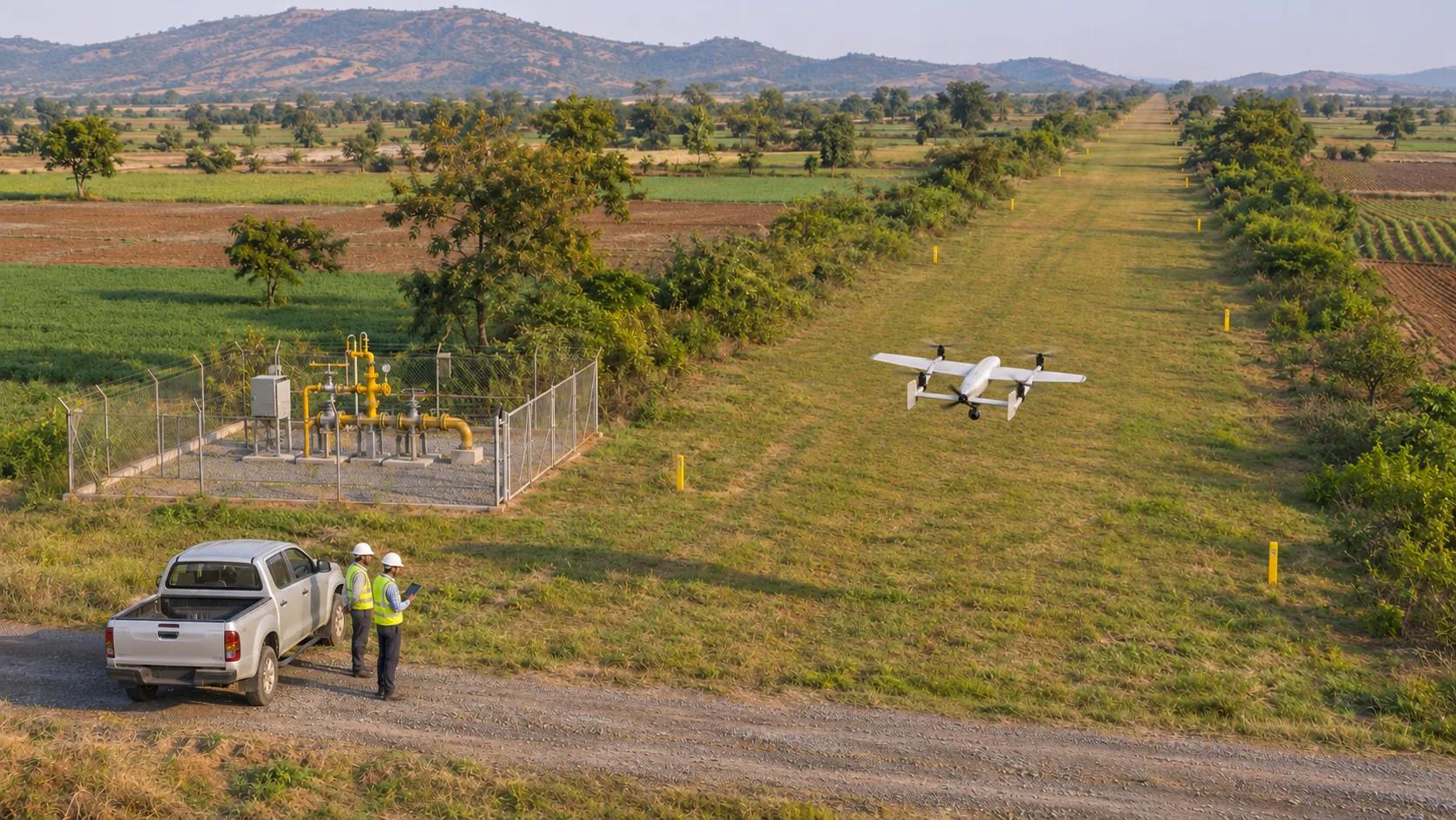
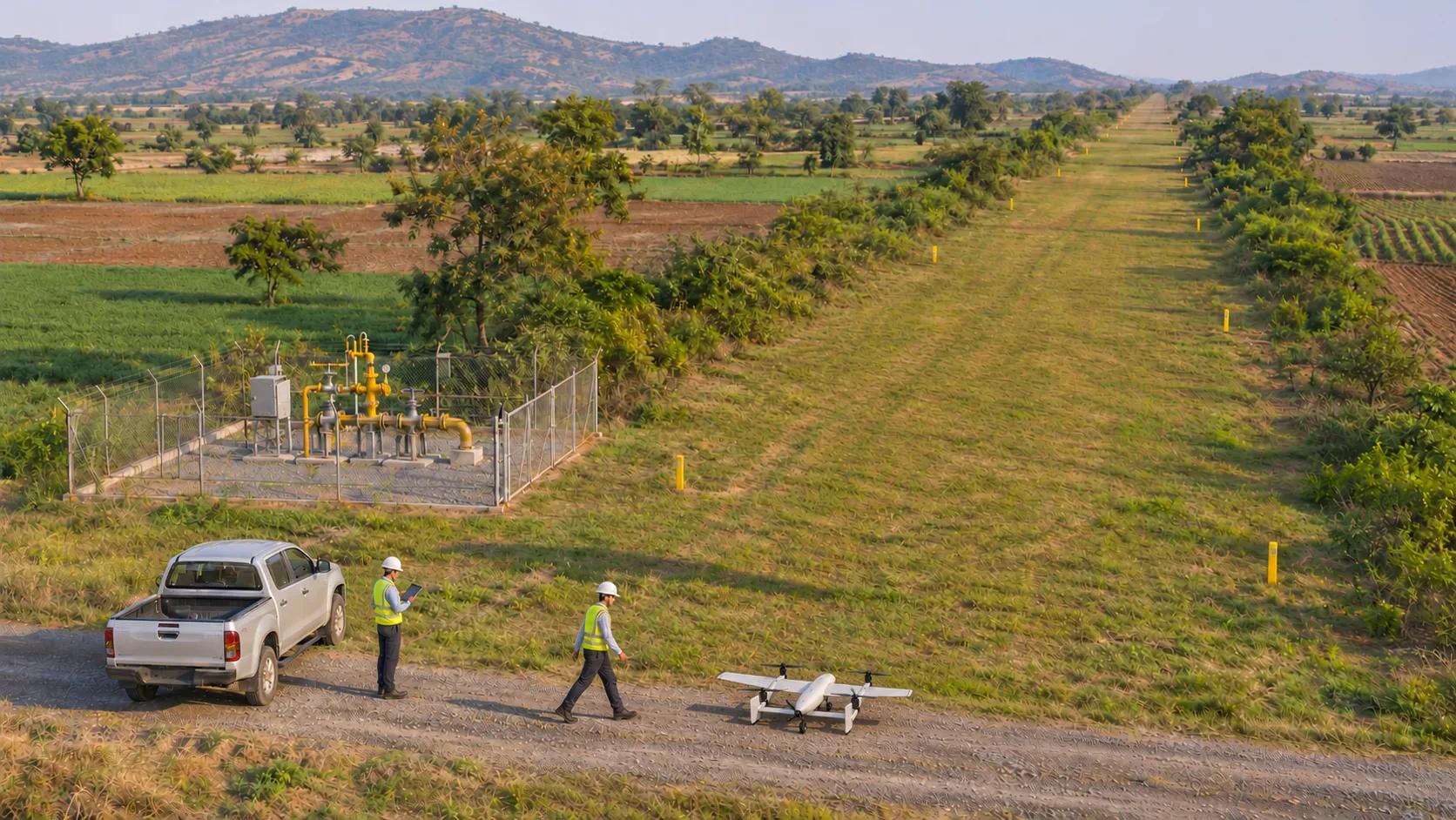
Inspect defined route assets and record defects or changes along them.
What you receive
- Chainage/asset-linked image and defect register
- ROW and encroachment observations
- Optional clearance model or internal CCTV records
- Maintenance-review dataset and coverage report
When you need it
I need a pipeline or rail corridor inspected
Who it is for
- Oil/gas and water utilities
- Railways and metros
- Highways and transport operators
- Corridor EPC and maintenance
Scope and options
Corridor inspection records condition against chainage/asset ID so observations can be acted on in the owner's maintenance system.
Aerial ROW observation does not measure buried-pipe wall condition; internal pipe work needs separate robotic/NDT methods.
Rail clearance, track geometry and rail-flaw testing are distinct calibrated disciplines.
Pipeline ROW and exposed-asset inspection
Observe exposures, crossings and visible route changes.
External imagery does not determine buried-pipe wall integrity.
Railway OHE, structure and clearance inspection
Record railway assets and specified clearances.
Railway access and traffic/electrical protection are mandatory project inputs.
Robotic CCTV sewer and pipeline inspection
Inspect accessible internal pipe surfaces with crawlers/cameras.
Separate ground-robotic scope, cleaning/access controls and competent defect interpretation.
Road asset and pavement-condition monitoring
Document road assets and specified pavement observations.
Calibrated roughness/rutting tests need a suitable specialist system.
Methane/LDAR follow-up
Investigate suspected gas leaks with gas-specific sensing.
Gas-specific sensing can flag suspected emissions; a leak-rate claim requires a separately validated quantification method.
Terms explained
- Right of way (ROW)
- The corridor within which pipeline, rail or related assets and encroachments are assessed.
- Route condition
- Visible asset, terrain, vegetation and access changes recorded along the corridor.
- Clearance survey
- Measured space between rail/pipeline infrastructure and nearby structures or obstacles where required.
Questions
Can aerial imagery prove a buried pipeline is sound?
It can show route conditions and visible exposure. Internal condition, corrosion and wall thickness need the appropriate inspection/testing methods.
Does railway imagery certify track geometry or detect internal rail flaws?
Those require specified measurement and testing systems beyond ordinary aerial inspection.
Can the service include sewers and water pipes?
Yes. Robotic CCTV inspection can be defined in the agreed scope and carried out through a suitable partner, with access and safety arrangements confirmed.
Can a route inspection run beyond visual line of sight automatically?
Route length, automation or a dock does not create operating permission. The partner must establish the applicable lawful operating basis.
Method and limits
Choose the asset and failure question before selecting an inspection method.
Reference findings by chainage, asset ID and observation date.
Keep external observation, internal pipe inspection and calibrated rail/road tests distinct.
Sources
- The Drone Rules, 2021 — G.S.R. 589(E), Gazette of India
Ministry of Civil Aviation / Directorate General of Civil Aviation
- Geospatial guidelines and entity self-certification conditions
Department of Science and Technology
- Digital Personal Data Protection Rules 2025
MeitY / Gazette of India
- Manual on Sewerage and Sewage Treatment Systems — CCTV sewer inspection
CPHEEO / Ministry of Housing and Urban Affairs
- Railway and highway monitoring in the drone ecosystem
PIB / MoCA