Solar thermography
Find thermal anomalies and use separate electrical tests where deeper diagnosis is needed.
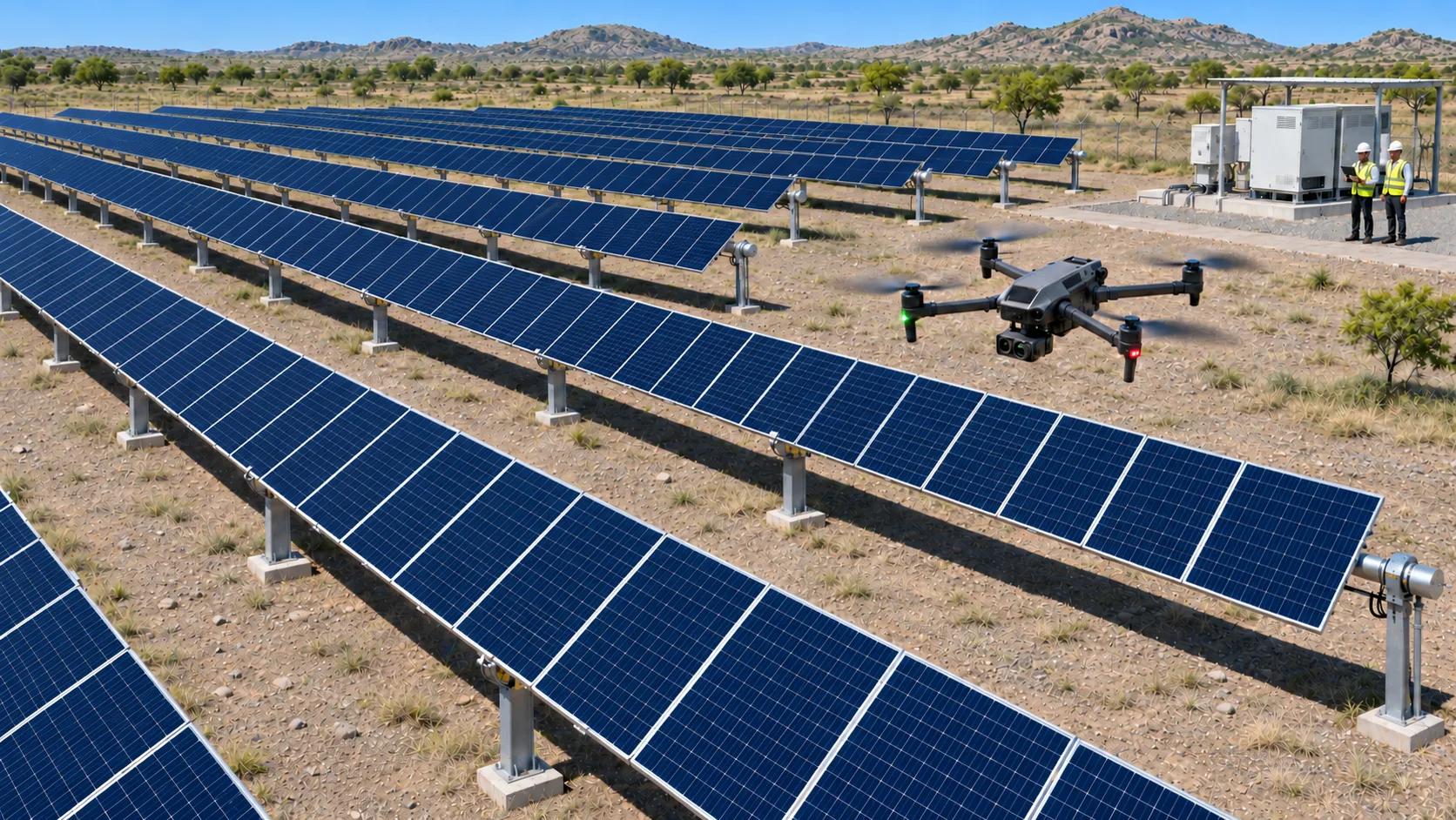
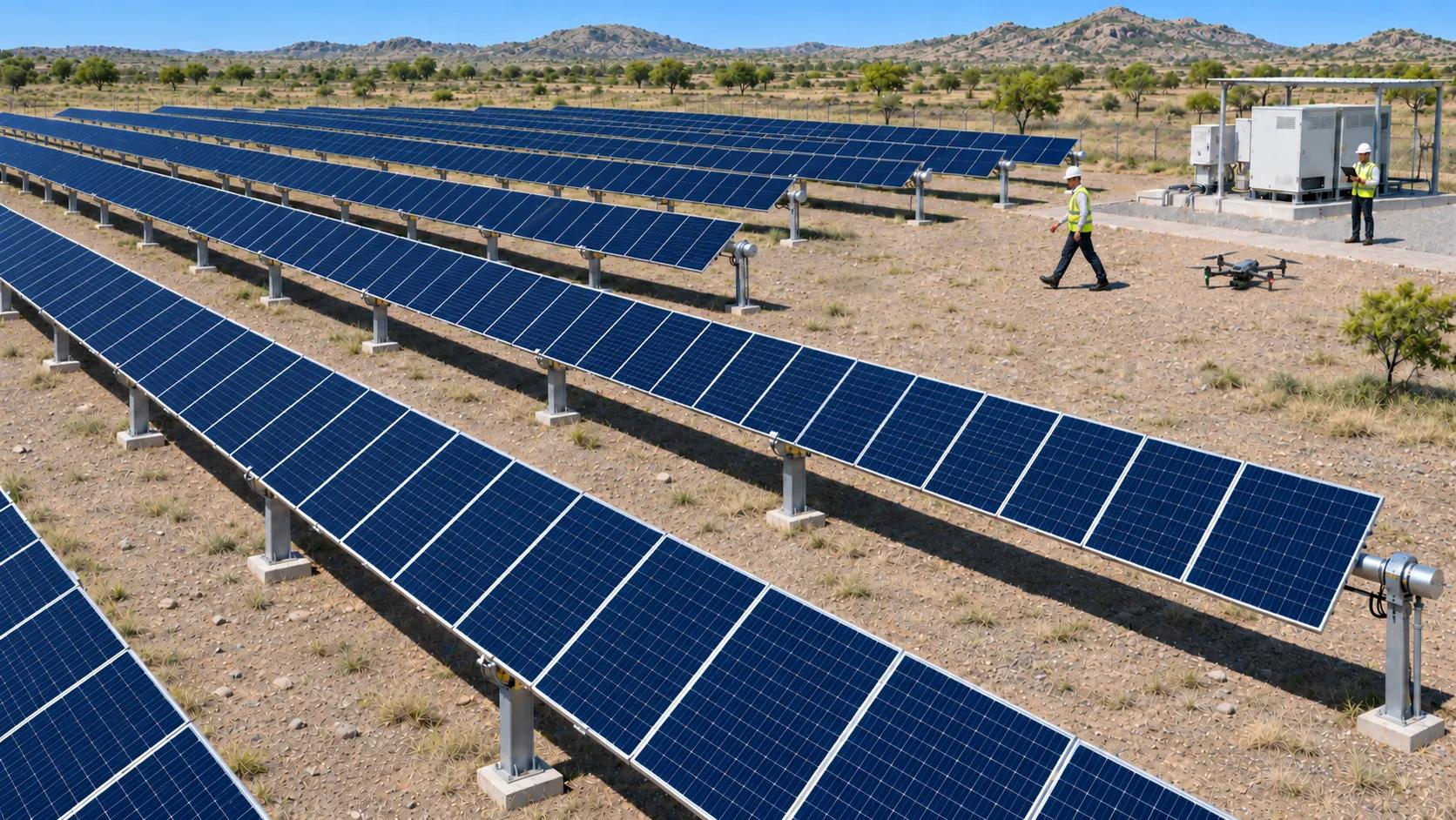
What you receive
- Geolocated radiometric and visible imagery
- Module/string anomaly register
- Severity and verification worklist
- Optional EL images and I-V test records
When you need it
I need to find faults in my solar plant
Who it is for
- Solar owners and O&M teams
- EPC and commissioning teams
- Warranty and technical due-diligence consultants
Scope and options
Radiometric PV thermography maps temperature patterns while modules are operating under suitable irradiance and environmental conditions.
EL imaging and I-V tracing test different electrical/physical characteristics and are separate from infrared imaging.
Geolocated anomaly mapping supports diagnosis; root cause and energy impact may require electrical or physical follow-up.
PV infrared thermography
Screen operating modules and associated equipment for abnormal heat patterns.
Apply the agreed IEC TS 62446-3-based method; unsuitable conditions may require rescheduling.
Electroluminescence (EL) testing
Use a dedicated electrical/optical test to examine module defects.
Requires specialist equipment, electrical procedures and a separately confirmed vendor.
I-V curve tracing
Measure current-voltage performance of selected modules or strings.
Test conditions, configuration and calibration must be recorded.
Post-repair reinspection
Check previously reported anomalies after remedial work.
Comparable conditions are required; repairs themselves are not included.
Terms explained
- Infrared thermography
- Radiometric thermal imaging used to locate temperature anomalies under suitable operating conditions.
- Electroluminescence (EL)
- Electrical test imaging that can reveal module-cell defects not visible in ordinary thermal images.
- I-V curve
- Measured current-voltage response used to assess electrical performance of a module or string.
Questions
Does a hotspot prove a failed module?
A thermal hotspot is an observation, not a root-cause diagnosis. Shading, soiling, connections and operating conditions may require electrical or physical confirmation.
Can you do the same PV thermal test at night?
Operating PV thermography needs suitable irradiance and electrical conditions. Electroluminescence is a different test and can use low-light/night conditions depending on the test setup.
Are EL and I-V testing included automatically?
No. They have separate equipment, personnel, access and electrical-safety requirements and must be selected in the scope.
Will the report guarantee an energy-yield improvement?
The report identifies observations and investigation priorities. Energy impact depends on confirmed faults, operating data and completed remedies.
What sunlight condition is used for outdoor PV thermography?
IEC TS 62446-3-based practice requires suitable, stable operating conditions. Industry guidance tied to that standard uses at least 600 W/m² irradiance in the plane of the module for infrared inspection. The actual inspection plan records the measured conditions.
Method and limits
Collect radiometric infrared evidence under suitable operating and environmental conditions.
Identify module/string locations and distinguish observation from confirmed fault diagnosis.
Electroluminescence and I-V curve tracing are separate tests, not ordinary thermal-camera outputs.
Outdoor PV infrared thermography is covered by IEC TS 62446-3. Practice tied to that standard uses at least 600 W/m² irradiance in the plane of the module with suitable stable conditions. IEA PVPS Task 13
Sources
- The Drone Rules, 2021 — G.S.R. 589(E), Gazette of India
Ministry of Civil Aviation / Directorate General of Civil Aviation
- IEC TS 62446-3: outdoor PV infrared thermography
International Electrotechnical Commission
- On-site solar laboratory in India
DNV