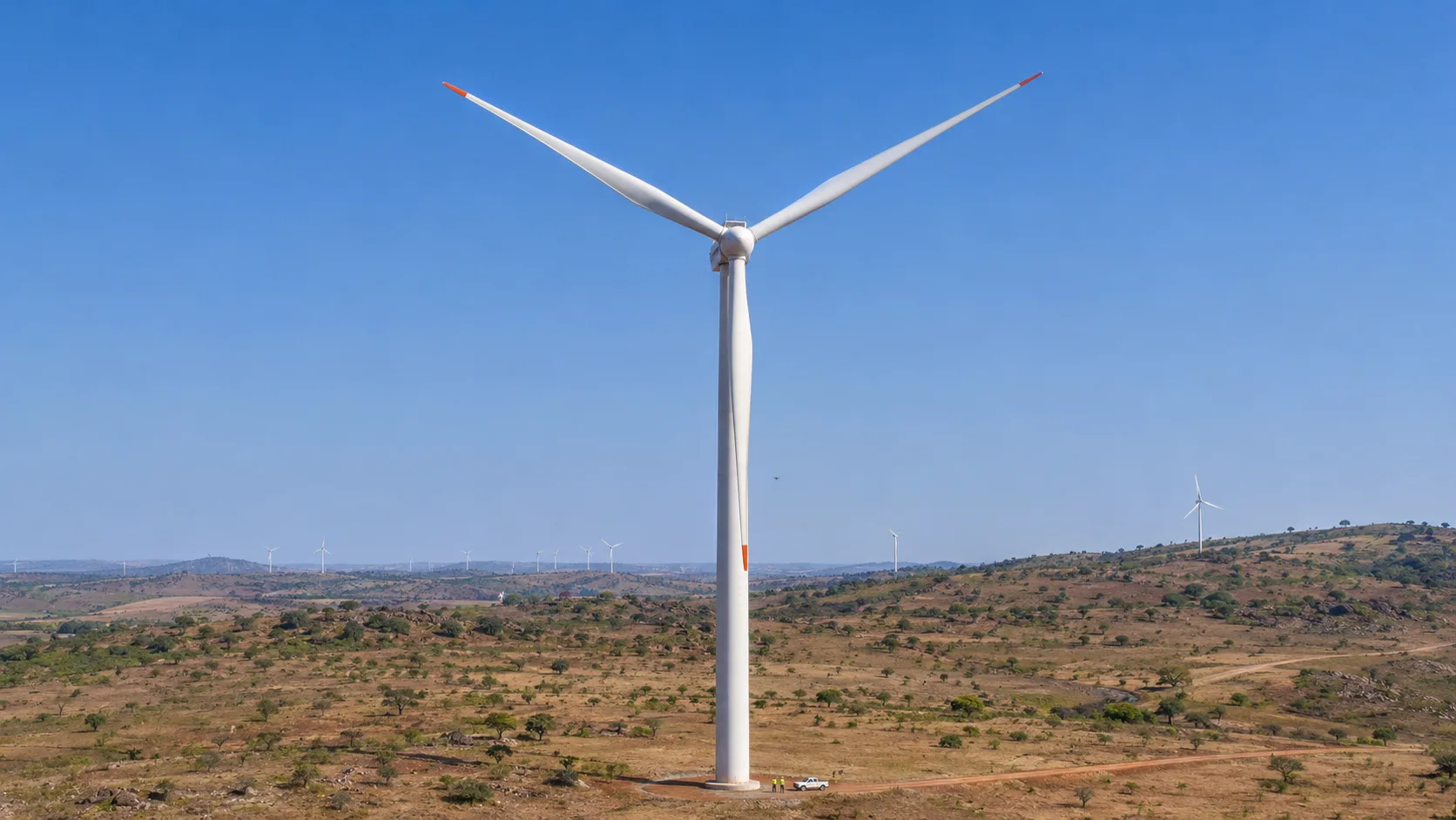
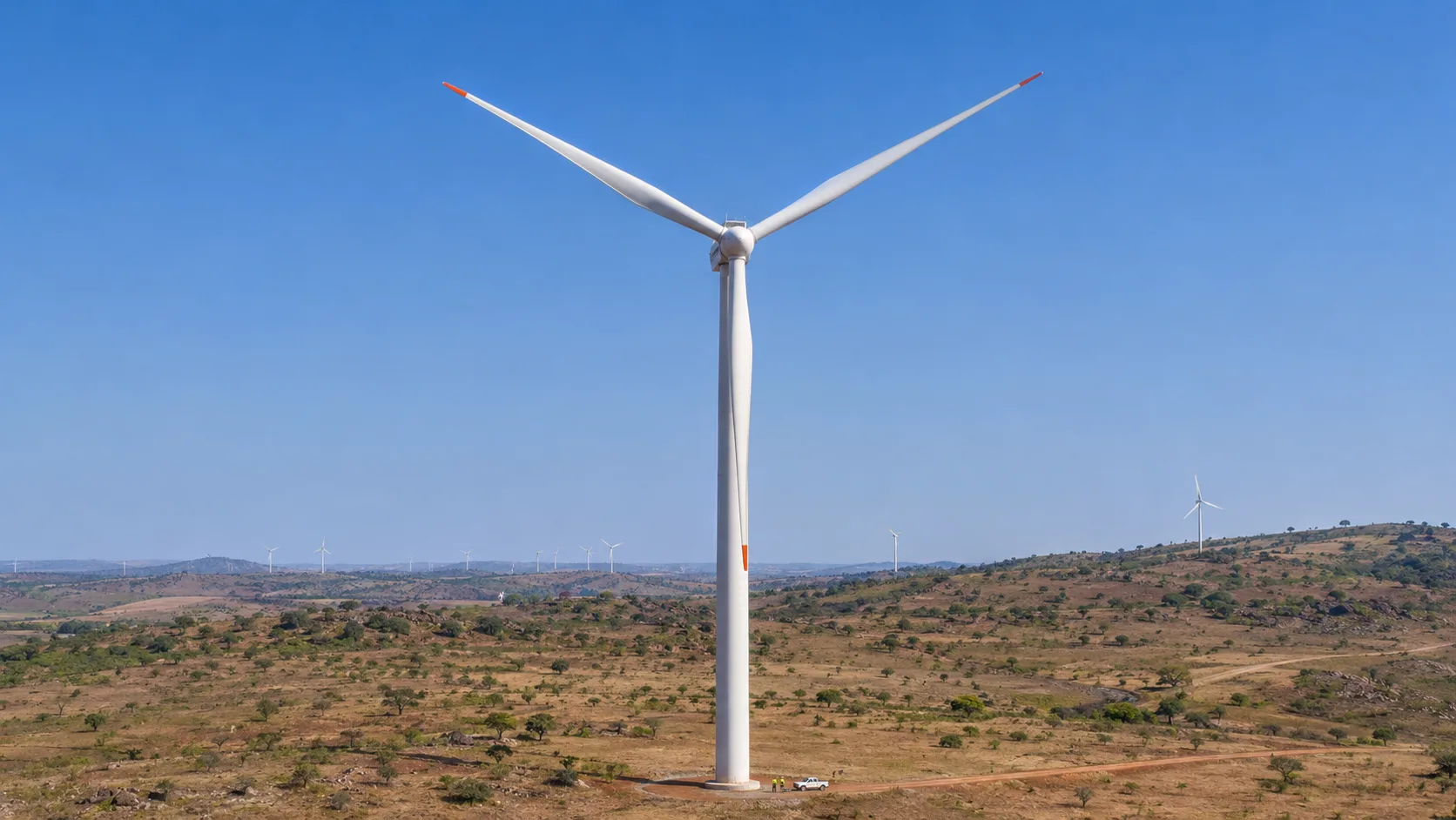
Wind turbine blade inspection
Document accessible blade and turbine-surface defects for maintenance review.
What you receive
- Blade/turbine image register
- Location-referenced defect map
- Condition comparison with prior surveys
- Coverage and maintenance-review report
When you need it
I need wind-turbine blades inspected
Who it is for
- Wind-farm owners
- Turbine OEMs and maintenance teams
- Technical asset managers
Scope and options
Blade inspection is a repeatable surface-coverage problem: defect location must stay tied to blade, side and spanwise position.
External RGB/thermal evidence does not reveal every internal laminate or lightning-protection defect.
Comparable repeat inspections depend on turbine state, viewpoint and image quality.
Blade external visual inspection
Document erosion, cracks and other visible surface indications.
Internal laminate condition requires separately specified testing.
Tower and nacelle external inspection
Observe accessible external surfaces and fittings.
This is not a complete mechanical or electrical safety assessment.
Repeat post-repair inspection
Compare repaired locations with prior findings.
Comparable coverage is required; defect closure remains owner/OEM controlled.
Terms explained
- Blade surface survey
- Systematic visual capture of blade areas for defect location and comparison.
- Defect mapping
- Location and classification of observed erosion, cracks, coating or lightning-related indications.
- Repeat inspection
- Comparable capture over time to support maintenance decisions.
Questions
Does visible inspection prove a blade is structurally sound?
Internal damage may not be visible. The owner/OEM determines additional testing and engineering acceptance.
Can the turbine remain running?
The owner/OEM-approved inspection procedure determines operating state. We do not promise inspection of moving blades.
Is lightning-protection testing included?
Electrical continuity and related tests are distinct from external imagery and require separate equipment and personnel.
Can we compare defects over time?
Yes, when locations, coverage and image quality are consistently documented. Changes are reported with any comparability limitations.
Method and limits
Use repeatable, asset-referenced coverage of agreed blade and tower surfaces.
Record visible defects, inaccessible areas and review priorities.
Coordinate turbine state, shutdown and access with the owner/OEM.
Sources
- The Drone Rules, 2021 — G.S.R. 589(E), Gazette of India
Ministry of Civil Aviation / Directorate General of Civil Aviation
- Wind-turbine blade inspection with drones
Yokogawa India